The 27 Lost Burials Archaeologists Are Still Looking For

The 27 Lost Burials Archaeologists Are Still Looking For
The burials of some of history’s most famous characters have been lost to time; providing an enthralling adventure for archaeologists.
Some of archaeology’s greatest discoveries are the tombs of ancient people, but often not those mentioned in history books. The remains found typically provide key insights into long-lost societies’ mechanisms, diets, and beliefs. Archaeologists can also test the remains for ancestry and ethnicity, offering a more detailed glimpse into the past. However, discovering history’s most legendary figures’ tombs could provide even greater knowledge, educating us about our history like never before.
27 infamous lost burials
Many burial sites of the greatest names in history have been lost, but that doesn’t stop archaeologists from attempting to find them again.
Alexander the Great

Alexander the Great tops the list of most sought-after tombs of the ancient world. The Macedonian king had conquered much of the ancient world by 326 BC before passing away in Babylon in 323 BC, possibly from illness or even poisoning. His body was preserved in honey and taken to Egypt, first buried in Memphis and later in two tombs in Alexandria. However, much of Alexandria was destroyed in the fourth and fifth centuries AD Today, the location of his tomb remains unknown.
Genghis Khan

Genghis Khan built a vast empire stretching from modern Ukraine to China before dying in 1227 at around 67 years old. The Mongol leader’s cause of death is unknown, with theories ranging from illness to battle wounds. Marco Polo later claimed he died from an infected arrow wound and that 20,000 people were killed to keep his tomb’s location secret. Today, archaeologists believe his tomb may be hidden in the Ordos region of northern China, but no one confirmed these suspicions.
Cleopatra and Mark Antony

The location of the remains of one of history’s most famous pair of lovers, Cleopatra VII, the last queen of Egypt, and the Roman general Mark Antony remains unknown. After Julius Caesar’s assassination, Antony allied with Octavian but later rebelled, seeking control over Egypt and Rome’s eastern territories. They lost the Battle of Actium in 31 BC, and Cleopatra, facing defeat, reportedly killed herself with a snake bite in 30 BC Antony, believing her dead, took his own life with a sword. Their final resting place remains unknown, though some believe they were buried together.
Attila the Hun
Attila, leader of the Huns, built a powerful empire in Eastern and Central Europe during the fifth century AD Feared by both the Eastern and Western Roman Empires, he ruled from 434 until his sudden death in 453, reportedly on his wedding night. He is said to have died from severe bleeding, though some speculate his wife Ildico poisoned him. Attila was said to have been buried with great riches in Hungary, but legend says the servants who buried him were killed to keep the tomb’s location secret, similar to Genghis Khan. So its whereabouts remain unknown.
Khufu

Ancient Egypt is known for its royal tombs, and one of the most famous belongs to Pharaoh Khufu. His tomb is the Great Pyramid of Giza, which still stands near Cairo today. However, the exact chamber where his body was entombed has never been found, despite extensive exploration of its passages. Khufu ruled Egypt from around 2551 to 2528 BC, and recent cosmic ray scans have revealed a hidden tunnel inside the pyramid. So far, though, there is no evidence that it leads to his burial chamber.
Amenhotep I
Amenhotep I ruled Egypt from approximately 1525 to 1504 BC and was renowned for rebuilding temples and expanding Egyptian influence. His mummy was discovered in the 19th century near Luxor, hidden to protect it from grave robbers. However, his original royal tomb has never been found. He was highly regarded by later Egyptians, who established a funerary cult in his honor. Despite his historical significance, the location of his final resting place remains a mystery.
Nefertiti
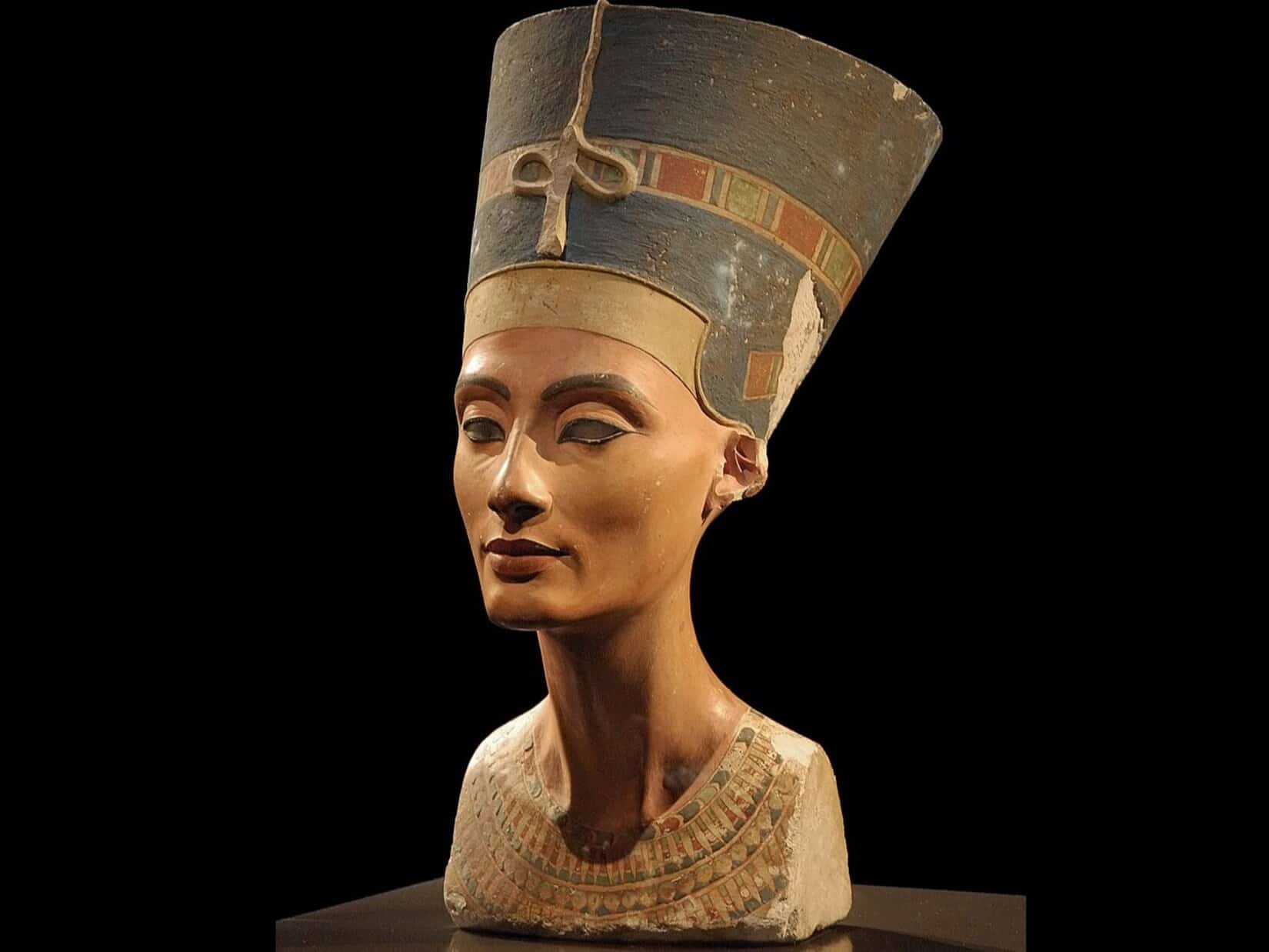
Nefertiti, a famous queen of Egypt, became even more renowned after a painted wooden bust of her was discovered in 1912. She lived from around 1370 to 1330 BC and was the wife of Pharaoh Akhenaten, who introduced monotheism in ancient Egypt, worshipping the sun god, Aten. Some believe she acted as a co-ruler, as many carvings depict her alongside Akhenaten. There has been speculation about her burial site, but her royal tomb and mummy have never been found.
Akhenaten

Like his wife, the tomb of Pharaoh Akhenaten has never been found, though some believe his reburied mummy was discovered in the early 20th century. Originally named Amenhotep IV, he changed his name to Akhenaten to honor the sun god Aten. His religious reforms, promoting monotheistic worship of Aten, were short-lived. After his reign from 1349 to 1336 BC, his son Tutankhamun restored the worship of Egypt’s traditional gods. Akhenaten remains a controversial and mysterious figure in Egyptian history.
Ankhesenamun
Ankhesenamun, both the half-sister and wife of Tutankhamun, was born to Nefertiti and Akhenaten. She lived from about 1348 to 1322 BC, and her tomb is believed to be in the Valley of the Kings near Tutankhamun, though it has never been found. Given her royal status, her tomb is expected to be elaborate and grand. If discovered, it could provide valuable insights into Egypt’s 18th dynasty.
Ramesses VIII
Ramesses VIII’s burial site eludes even the most proficient archaeologists. Details about his life are limited, including his age when he became pharaoh, and the cause of his death. This period was marked by instability in the Egyptian royalty, suggesting he may have been involved in succession disputes. Ramesses VIII was the son of the powerful Pharaoh Ramesses III and succeeded his half-nephew, Ramesses VII. He remains the only king of his dynasty whose remains have not been discovered.
Boudica
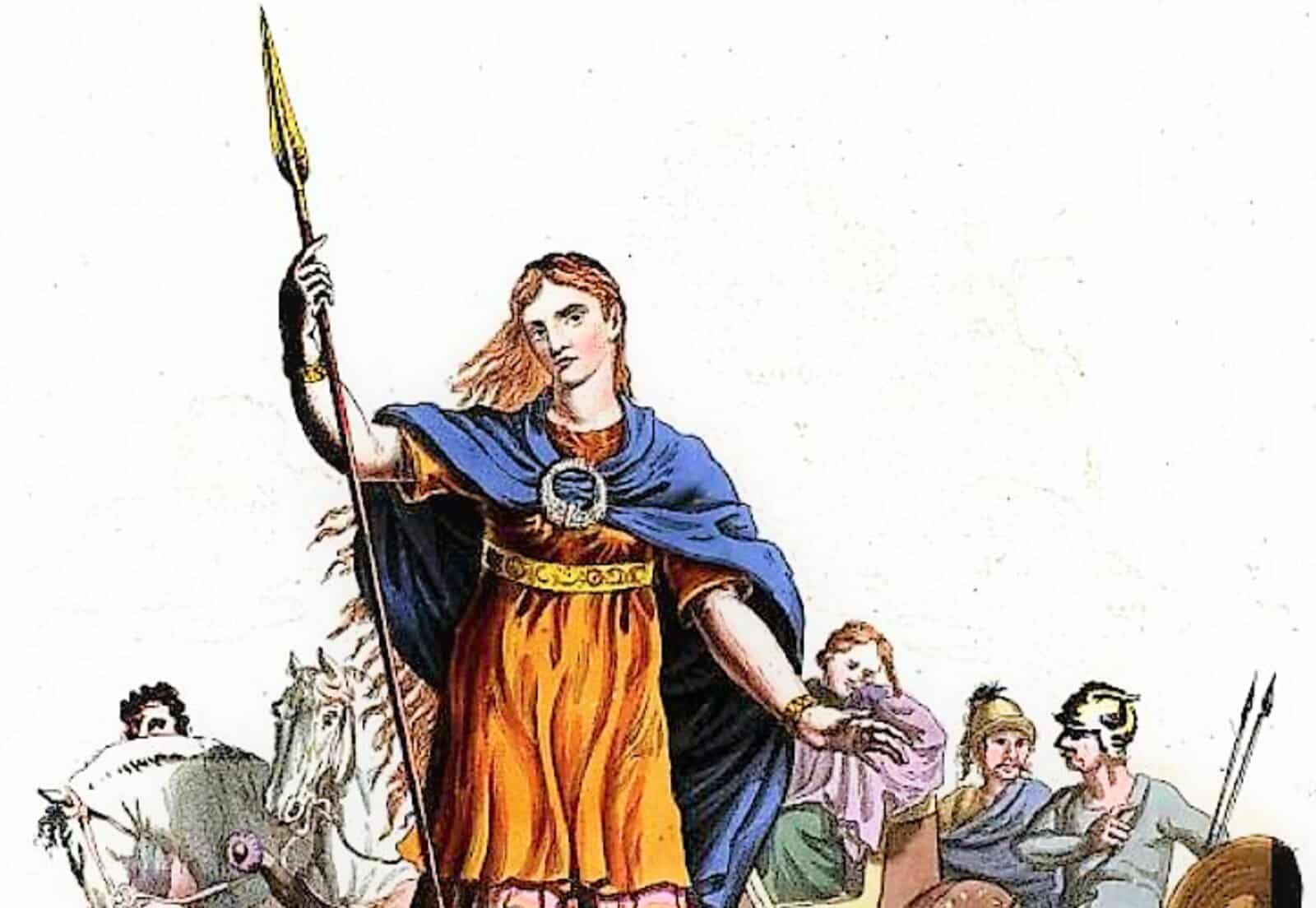
Boudica was the legendary queen of the Iceni tribe in what is now Norfolk, England, and led a revolt against Roman rule in AD 60. The uprising was triggered by the death of her husband, after which the Romans claimed ownership of the Iceni kingdom, disregarding the rights of Boudica’s daughters. Following a brutal response from the Romans, including her beating and the assault of her daughters, Boudica rallied several British tribes to her cause. Although the revolt was eventually crushed, she became a national hero in England. Boudica died after her final battle in AD 61, possibly by poisoning to avoid capture, and her tomb is rumored to be in Hampstead or beneath a train platform at King’s Cross station.
Alfred the Great
Alfred of Wessex, known as Alfred the Great, was the first king of the Anglo-Saxons, born in 849 AD. He ruled the kingdom of Wessex and dedicated much of his reign to defending against Viking invasions. Following a negotiation that granted the Vikings control over northern England, known as the Danelaw, Alfred emerged as a prominent ruler of England. He died in 899 at around 50 or 51 years of age. Initially buried in Winchester, his body was subsequently exhumed and reburied multiple times due to religious conflicts. The location of his final grave was lost in the 19th century, although searches continue to this day.
Harold II of England

King Harold II, also known as Harold Godwinson, is best remembered for his defeat at the Battle of Hastings in 1066, where he lost the English throne to William the Conqueror. While the famous Bayeux Tapestry depicts Harold as dying from an arrow to the eye, eyewitness accounts suggest he was killed by Norman cavalry. William was buried in Caen, France, but the location of Harold’s grave remains undiscovered. Harold’s death marked a significant turning point in English history, leading to Norman rule. The mystery of his final resting place endures to this day.
Richard III of England
Richard III, one of the most notorious English kings, was lost to history until his body was discovered beneath a parking lot in Leicester in 2012. He was killed at the Battle of Bosworth Field in 1485, just two years after being crowned king, marking the end of the Wars of the Roses and the rise of the Tudor dynasty. Richard was known for his ruthless tactics to claim the throne, which originally belonged to his brother, Edward IV, and was famously portrayed as a villain by William Shakespeare. After his death, he was hastily buried nearby, making him the only English king without a state funeral or a proper tomb.
The Princes in the Tower
Speaking of Richard III’s villainy, he allegedly ordered the murder of his two young nephews, 12-year-old Edward and 9-year-old Richard. After their father, King Edward IV, died in 1483, Richard seized the throne and imprisoned the princes in the Tower of London, claiming it was for their protection until one could rule. However, the boys were never seen again, leading to claims that Richard had them murdered that same year. In the 17th century, workers discovered two small skeletons in the tower, but it remains uncertain if they belonged to the missing princes. This mystery adds to the dark legacy of Richard III’s reign.
Montezuma II

Montezuma II, also known as Moctezuma, was one of the last emperors of the Aztec Empire in central Mexico before the Spanish conquistador Hernán Cortés arrived. He famously attempted to appease the invading Spaniards by offering them gold. His death in 1520 is shrouded in controversy, with differing accounts suggesting he was either betrayed by the Spanish or fatally injured by his people in retaliation. Some reports indicate that he was cremated shortly after his death, but his remains have never been found. This mystery adds to the tragic narrative of Montezuma’s reign during the Spanish conquest.
Christopher Columbus

The location of Christopher Columbus’s remains remains a subject of dispute. After he died in 1506, Columbus was initially buried in Valladolid, Spain, but his body was later exhumed and reburied in Sevilla. It is believed that his remains were then moved to Santo Domingo, in present-day Dominican Republic. Sevilla and Santo Domingo claim to hold Columbus’s bones, but the explorer’s resting place remains unknown. This uncertainty adds to the intrigue surrounding Columbus’s legacy as the first European to cross the Atlantic and initiate the colonization of the Americas.
Kamehameha I
Kamehameha I was the first king of the Hawaiian Islands, uniting them under his rule after years of warfare and negotiations. Initially, each island had its own royal family, with Kamehameha’s family representing the Big Island of Hawaii. He was believed to fulfill a native Hawaiian prophecy that foretold he would become king of all the islands. Kamehameha achieved this title in 1795 and ruled until he died in 1819. Following his death, his bones were placed in a sacred cave, the location of which has been kept secret per Hawaiian tradition.
Tecumseh
Tecumseh was a prominent leader of the Shawnee people, born around 1768 in Ohio, who sought to unite Native American tribes to resist the encroachment of American settlers on their lands. He fought against American colonists for many years, and his brother, Tenskwatawa, was an influential religious leader promoting a similar message. Tecumseh allied with the British against the United States during the War of 1812, but the British ultimately abandoned him. He died in 1813 while leading a charge against a larger force of American troops. Although he is believed to have been buried near the battlefield, there are no records of his grave’s exact location.
Leonardo da Vinci
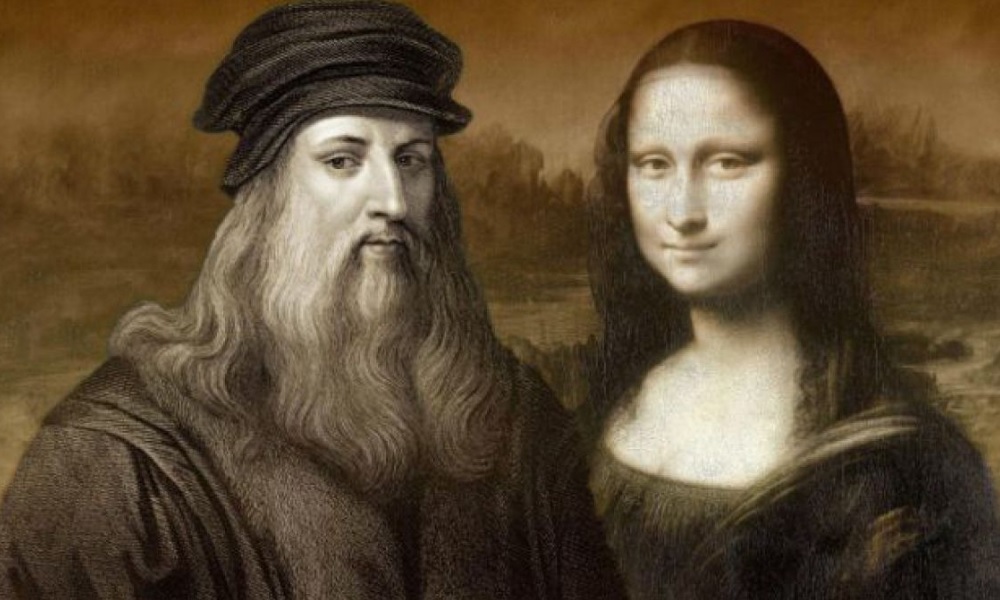
The artist, engineer, and proto-scientist Leonardo da Vinci may be the most famous figure of the Italian Renaissance, but no one is quite sure where his bones are. He died in France in 1519 and was buried for a time in a church at the Château d’Amboise in the Loire Valley. But the chateau was heavily damaged during the French Revolution and subsequently demolished in 1802; several graves at the site were destroyed or their contents were relocated, and the whereabouts of da Vinci’s remains are now unclear.
Vlad Dracula

Vlad Dracula, also known as Vlad the Impaler, was a national hero of Romania and ruled Wallachia in the 15th century, fiercely fighting for independence from the Ottoman Turks. He earned the nickname “the Impaler” due to his brutal method of execution, where he would impale his enemies on spikes. One notorious incident in 1462 involved him impaling an entire village of 20,000 people to deter advancing Turkish forces, who turned back in horror. Vlad’s family name, Drăculea, originally meant “dragon” in Romanian but later took on the meaning of “devil,” influencing the legend of Dracula in vampire folklore. His tomb has never been found, which some consider fortunate given his infamous reputation.
Francis Drake
Francis Drake, the favored privateer of Queen Elizabeth I, was killed in Panama in 1596 while attacking Spanish galleons laden with gold and silver from the New World. After his death, his body was dressed in armor, placed in a lead coffin, and buried at sea approximately 15 miles (24 kilometers) from Portobelo. Since then, divers, archaeologists, and treasure hunters have searched for his final resting place. However, the exact location of Drake’s underwater grave remains unknown, continuing to intrigue those who seek it.
Tulsa Massacre graves
In Tulsa, Oklahoma, hundreds of Black Americans may be buried in unmarked graves, victims of a 1921 race riot. At the time, authorities appeared to cover up the violence, resulting in the deaths of an estimated 300 people, mostly Black. Over 40 unmarked graves from this period have been discovered in Oaklawn Cemetery. Historians believe that additional bodies could still be found in Oaklawn and other locations throughout the city. This tragic history highlights the impact of racial violence and the need for acknowledgment and remembrance.
Harald Bluetooth
Harald “Bluetooth” Gormsson was a 10th-century king of Denmark and Norway known for uniting the warring Viking tribes in the region. His nickname “Bluetooth” may refer to his fondness for blueberries or a bad tooth that appeared black or blue. His legacy lives on today through the Bluetooth wireless standard, which enables various devices to communicate. Archaeologists have uncovered several unique circular forts built by Bluetooth to strengthen his rule, but the location of his tomb remains undiscovered. This ongoing mystery adds to the intrigue surrounding his historical significance.
Caligula

Gaius Caesar Augustus Germanicus, commonly known as Caligula, is often regarded as one of the most despotic Roman emperors, although some historians believe he may not fully deserve his negative reputation. As a child, he was well-liked, especially in the army due to his father’s status as a general, and his nickname, meaning “little boots,” came from the miniature Roman uniform he wore. However, his reign took a dark turn, and he was assassinated in A.D. 41 by disgruntled members of his bodyguard. While the tombs of many Roman emperors are well-documented, Caligula’s remains have never been discovered. Italian police claimed to have found his tomb in 2011, but historians are skeptical about this assertion.
James I of Scotland
Rival clan members assassinated James I of Scotland in 1437, ending his efforts to establish Perth as the royal capital instead of Edinburgh. Archaeologists believe that his tomb lies buried beneath the modern city, possibly within the remnants of a medieval priory or monastery, and are conducting excavations in hopes of uncovering it. A receipt from 1443 indicates that knights from the Order of St John took his embalmed heart to the Holy Land. The search for James I’s final resting place continues to spark interest in Scotland’s medieval history.