The Monumental Projects of Herodes Atticus in Greece

The Monumental Projects of Herodes Atticus in Greece
Herodes Atticus’ projects left a lasting mark on the 2nd century AD, shaping the cultural and architectural landscape of Greece. The ancient Greek sophist Philostratus dedicated a significant portion of his work, Lives of the Sophists, to Herodes’ life and achievements.
As a leading figure of the Second Sophistic movement, Herodes taught in the most prestigious schools of antiquity but became even more renowned for his generosity. After inheriting a vast fortune from his parents, he devoted much of his wealth to restoring monuments and commissioning grand offerings at Greece’s most revered sacred sites.
Early life of Herodes Atticus: His descent from Miltiades
Born in 101 AD, Herodes Atticus was the son of Titus Claudius Atticus and the Athenian Vibullia Alcia Agrippina. His paternal grandfather, Hipparchus Atticus, belonged to the Aeacidae clan and descended from notable ancestors such as Miltiades and Cimon. Hipparchus attempted unsuccessfully to become the tyrant of Athens, leading to the confiscation of his property. Later, Herodes’ father discovered a treasure in a well at their house, which the Emperor Nerva allowed him to manage freely. He then assumed the offices of consul and senator in Rome.
Herodes received an extensive education under the most distinguished teachers of his time. He studied rhetoric with Scopelian of Clazomenae, Polemon of Laodicea, Favorinus of Arelate and Secundus the Silent. Theagenes of Cnidus and Munatius of Tralles trained him in critical rhetoric, while Taurus of Tyre introduced him to Platonic philosophy. These intellectual mentors profoundly shaped his personality.
Herodes Atticus and the Second Sophistic movement
A master of rhetorical art and philosophical thought, Herodes built his career in Athens and other cities across the eastern Mediterranean. He became a leading figure of the Second Sophistic movement, striving to maintain the connection between rhetoric and the sophist school. Additionally, as a skilled practitioner of Attic oratory, he passionately advocated for the pure Attic style. He actively engaged in writing, producing ostentatious speeches, dissertations, diaries, letters and collections such as retorts and various notes. Of his writings, only the speech “On the State” survives, though scholars dispute its authenticity.
Herodes used part of his fortune to provide for his students, assuming a role similar to Maecenas in Athens. Despite his influence, later generations did not fully embrace his dedication to the Attic models. However, notable philosophers such as Aelius Aristides, Hadrian of Tyre, Aristocles of Pergamum, Christus of Byzantium, Pausanias of Caesarea, Ptolemy of Naucrates, Rufus of Perinth and the Roman Aulus Gellius admired and drew inspiration from his teachings.
Students from across the Mediterranean traveled to Athens to learn from Herodes. Their admiration for him is evident in Philostratus’ writings. Alexander of Seleucia once declared, “Oh Herod, we are all sophists.” When asked why he did not imitate Herodes’ style, Hadrian of Tyre responded, “Those who are drunk imitate, but Herod, the king of words, was a lover of wine and a fool; I would not imitate him.” Rufus of Perinth expressed immense pride in studying under Herodes, referring to him as “this lord of good and Greek tongues and kingly words.”

Political career of Herodes Atticus
These talents of Herodes, combined with his abilities in rhetoric and philosophy, gave him special prestige. In the field of politics, Herodes assumed high positions in Athens and Asia Minor. In 125 AD, the emperor Hadrian appointed him as prefect of the free cities of Asia Minor, where he was praised by the emperor himself, both for the good administration he exercised and the reconstruction of the baths of Troas.
He was elected eponymous archon in the city of Athens in 140 AD and organizer of the Panhellenic Games. He was even honored by his fellow citizens with a wreath for the successful organization of the Panathenaic Games.
At the same time, he was invited by the Roman emperor Antoninus Pius to take charge of the education of the young successors Marcus Aurelius and Lucius Verus. Finally, in recognition of the emperor’s friendship and kindness towards him, he was appointed consul in 143 AD.

Herodes’ contributions to Athens
Herodes dedicated much of his wealth to constructing temples and buildings, offering statues and organizing games. His contributions appear in many cities across Greece and the wider Mediterranean basin.
He initially invested a large portion of his fortune to enhance the city of Athens. When he took charge of organizing the Panathenaic Games, he celebrated the festival with remarkable splendor and luxury. He replaced the traditional mock ship pulled by pack animals with a real ship moved by an invisible mechanism.
Herodes skillfully placed a goddess’s veil on the ship, allowing it to flutter due to the motion, which captivated the spectators. He also changed the attire of adolescents, who began wearing white tunics instead of the customary black ones. In recognition of these contributions, the Athenians honored him with a wreath.
Atticus then promised them that next time they would be welcomed in a stadium made of white marble. He fulfilled his promise by renovating the Panathenaic Stadium within four years (140–144 AD). The new stadium, with a track length of 204.07 meters and a width of 33.35 meters, featured a horseshoe shape and a seating capacity of 50,000 spectators. Built-in stairs provided access between the stands, while arcades adorned the facade and the sphenodon.
The Athenians, who had been frustrated by their lack of inheritance from their fathers and even had to pay compensation, claimed the stadium was rightfully named Panathenaic because it was built using the wealth taken from them.
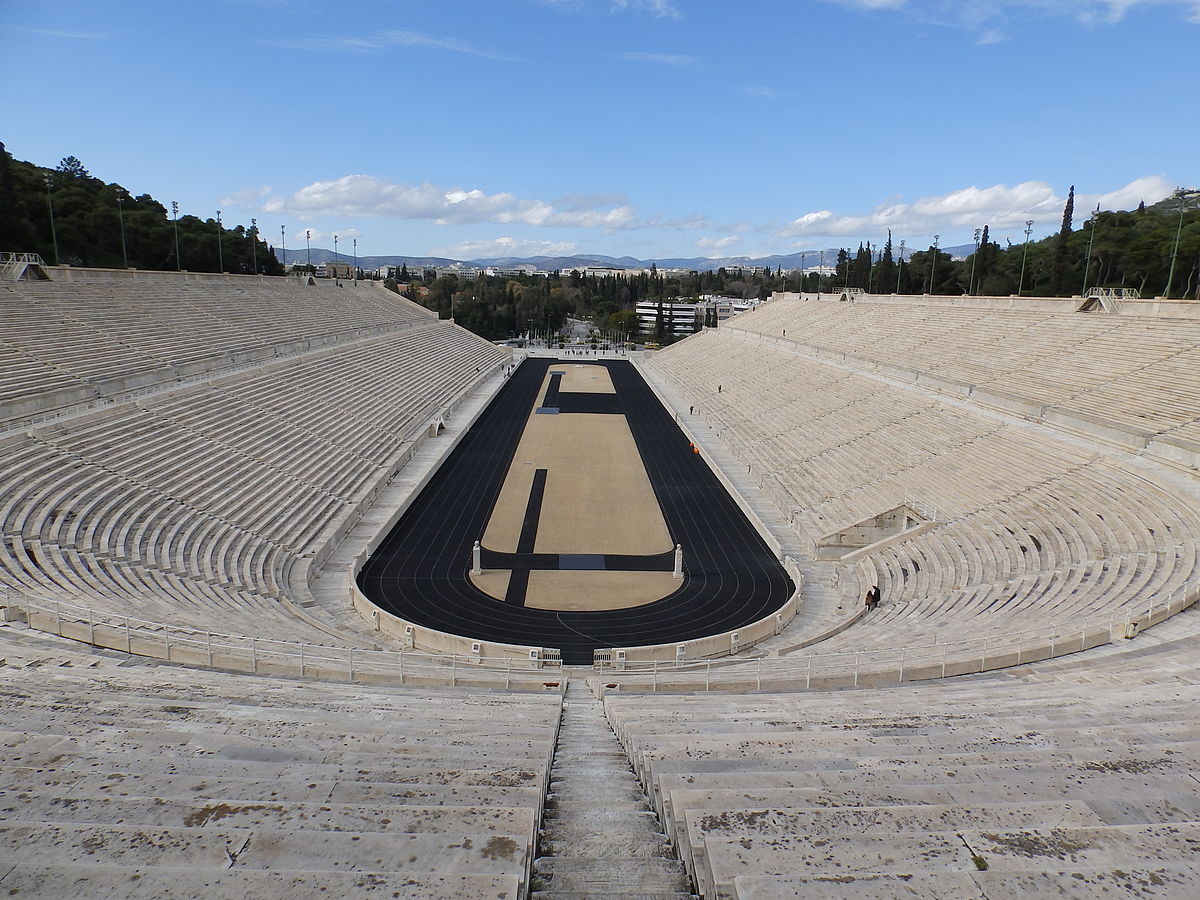
The Athenian projects of Herodes Atticus
In 160 AD, Herod honored his late wife by dedicating her jewelry to the sanctuary of Persephone and Demeter in Eleusis. He also constructed several important buildings, the most notable being the Odeon, which replaced the previous structure destroyed in 15 BC. This covered building featured a cedar roof, 32 rows of marble stands, and a seating capacity of approximately 5,000 spectators. The semicircular orchestra followed the architectural style of Roman theaters of that time. Behind the stage, an elevated three-story stage building stood, two floors of which survive today.
Among the significant monumental projects of Herodes Atticus was the construction of a fountain at Olympia. This project combined artistic grandeur with practical utility. In 153 AD, Atticus and his wife Regilla funded the construction of this costly nymphaeum to persuade the Elis to grant Regilla the prestigious position of priestess of Demeter Chamyne. As the only woman allowed to attend the Olympic Games, the priestess occupied a seat opposite the Hellanodikai, holding an esteemed title.

The Nymphaeum at Olympia
The nymphaeum played a crucial role in providing water to Olympia, preventing attendees and athletes from relying on nearby wells. In the dry climate of the region, this fountain alleviated the water shortage, especially during the Olympic Games. The impressive semicircular structure measured 30 meters in diameter and featured two unequal tanks and an apse. The apse’s semicircular wall, adorned with optolinthos and rich marble cladding, contained two floors with 11 niches on each. Marble statues occupied these niches, with Zeus’s statue placed centrally on both levels.
On the first floor, statues of Emperor Antoninus Pius’s family surrounded Zeus. On the second floor, statues of Herod’s and Regilla’s family members filled the spaces. A marble bull stood in the semicircular tank, bearing the inscription:
“REGILLA PRIESTESS OF DEMETER DEDICATES THIS WATER AND ALL THINGS RELATED TO WATER.”
Below the bull’s platform, another cistern collected water from fountains. Two circular Corinthian-style pavilions stood at both ends of the cistern, housing statues of Herodes Atticus and Emperor Antoninus Pius.

Other contributions beyond Athens
At the sanctuary of the Isthmus, Herod dedicated a large statue of Poseidon, Amphitrite and Melicertes riding a dolphin. He also built a covered theater in Corinth. At Delphi, he honored Apollo by financing the installation of stone seats in the stadium where the Pythian Games took place. According to the French School at Athens, these seats, made from Parnassus limestone, accommodated 5,000 spectators. The horseshoe-shaped stadium measured 177.55 meters in length and 25.50 meters in width. The northern side contained 12 rows of seats, while the southern side had only six rows because of the sloping terrain. Stairways divided the seating areas to facilitate movement.
In Thermopylae, he funded the construction of marble thermal baths to treat the sick. Herodes Atticus also financed similar projects in the Peloponnese, Euboea, Boeotia, Alexandria and the Italian Peninsula.