Ancient Greeks Pioneered Pain Relief and Early Anesthesia

Ancient Greeks Pioneered Pain Relief and Early Anesthesia
The foundations of pain management can be traced back to ancient Greece, where physicians and philosophers explored various methods to relieve pain and induce states resembling anesthesia for surgeries and other medical interventions.
Anesthesia in ancient Greece: Pioneering pain management
In Ancient Greece the understanding of pain and consciousness was deeply intertwined with philosophical thought. The ancient Greek physician Hippocrates, regarded as the Father of Medicine, emphasized natural causes and treatments for diseases, rejecting supernatural explanations. His works reveal an awareness of pain relief, prescribing herbal concoctions and techniques to mitigate discomfort during medical procedures.
In his treatise On the Surgery Hippocrates advised that “the physician must be experienced not only in what pertains to the disease but also in what pertains to the patient.” He highlighted the importance of considering both physical and emotional aspects of pain. Aristotle also pondered the nature of pain. He described it as a disturbance of the soul caused by injury. This interpretation reflected early efforts to connect physical experiences with psychological states.
The ancient Greek physician Galen, building upon Hippocratic principles, noted in his writings that “pain occurs when the continuity of the body is broken.” This illustrates the ancient understanding of nociception (the detection of painful stimuli) and bodily integrity. Their combined perspectives established a foundation for a holistic approach to patient care that considered mind, body and environment.
Ancient Greek surgery and trauma treatment: A historical perspective
In ancient Greece, surgical trauma treatment had developed significantly. In the Iliad, there are numerous references to wounds, injuries and their treatments. This indicates a well-established medical knowledge base that required anatomical expertise and therapeutic skills. Alongside trauma care, there was training in providing first aid, not just for physicians but for warriors as well. Achilles, for example, learned first aid from the centaur Chiron, who also treated Patroclus after his injury.
Surgery was not the only field to advance. Botany also evolved considerably. According to Greek mythology, Apollo, the god of healing, utilized various plants for pain relief and healing. He passed this knowledge to his son Asclepius.
Asclepius, who was from ancient Trikka of Thessaly, learned medicine from both his father and Chiron. To induce anesthesia during procedures in ancient Greece, substances like nepenthe were possibly derived from opium poppies. Notably, a Minoan-era statue (1450 BCE) depicts the goddess of healing with poppy seeds, emphasizing their early use in medical treatments.
Asclepius’ influence extended to the establishment of Asclepieia—temples that served both as places of worship and healing centers. These profoundly impacted Hippocrates, who laid the foundations of Western medicine. Hippocrates (5th century BCE) documented pain management methods and employed various pharmaceutical substances, dietary measures and therapeutic baths. Pharmacological remedies included a range of applications from poultices to powders and herbal extracts.
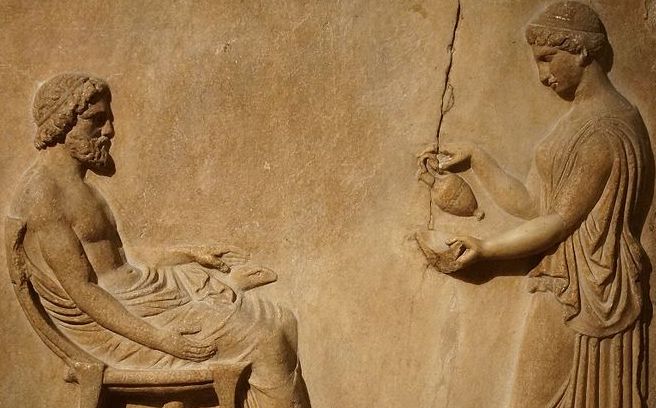
Understanding of psychological healing by the ancient Greeks
The ancient Greeks also showed an understanding of psychological healing. Helen of Troy’s use of a substance to alleviate sorrow, mentioned in the Iliad (1149 BCE), illustrates early recognition of mental health treatment. Plato’s reference to the word anesthesia in 400 BCE reflects the period’s evolving medical terminology.
An excerpt from ancient Greek tragedian Sophocles details Heracles advising Philoctetes to seek healing through medicinal plants, further showcasing the Greeks’ integrative approach to trauma care:
“Heracles said to Philoctetes: ‘Go to Troy with your bow and arrows to slay Paris. I shall send Asclepius’ son to heal your wound.’ Philoctetes washed his wound with fresh water at Apollo’s temple, where Machaon applied wine and healing herbs.”
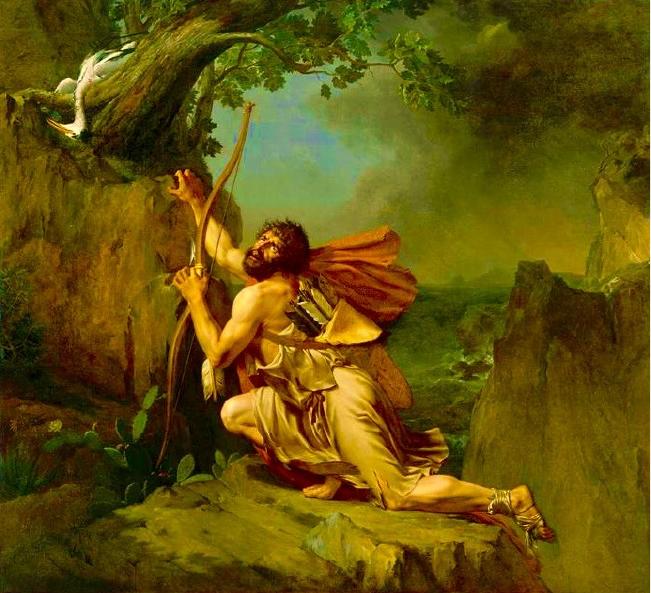
Herbal and natural anesthetics
Greek physicians employed various plants and natural substances known for their sedative and analgesic properties. Among the most commonly used anesthetic agents was mandrake (Mandragora officinarum), known for its hallucinogenic and narcotic effects. Mandrake roots were often used to induce sleep and dull pain.
Surgeons often gave patients a mandrake-based potion or placed the root near their nostrils to let them inhale its potent aroma. They commonly used opium poppy (Papaver somniferum) extracts, which patients ingested or applied as poultices to soothe pain. They also relied on henbane (Hyoscyamus niger) and its psychoactive alkaloids to induce sedation.
Greek physicians frequently employed wine, both as a drink and as a solvent for herbs, to enhance sedative effects—a practice Hippocrates himself recommended, stating that “wine is an appropriate remedy for man if in health temperate in quantity and suited to the individual constitution.” These natural remedies reflected a careful observation of nature’s offerings. They were also an empirical approach to finding effective treatments for pain relief.

Surgical practices and methods of pain control
Surgical practices in ancient Greece, though limited compared to modern standards, necessitated effective pain control methods. Surgeons used crude instruments for procedures like trepanation, removal of growths and setting of fractures. To mitigate pain, patients were given herbal concoctions to induce sleep or dull sensations.
In certain cases, physicians employed bloodletting to reduce sensory perception, based on the belief that draining excess humors could lessen pain. Physical methods, like compressing blood vessels or applying cold to numb areas, were also utilized. This demonstrated a multifaceted approach to pain management. Combining physical interventions with herbal preparations reflected the Greeks’ practical approach to confronting the challenges of surgery in the absence of modern anesthetics. Hippocrates stressed careful preparation of both the patient and environment, advocating for cleanliness and mental reassurance before procedures, emphasizing that a calm patient could better withstand surgical interventions.
Pain management during the Roman period reflected a combination of practical treatments and philosophical considerations. The Greek physician Dioscorides of Pedanius, a prominent figure of the 1st century CE, contributed significantly to the understanding of medicinal plants. His work, De Materia Medica, became a cornerstone in pharmacology, detailing hundreds of plants and their uses for pain relief. For instance, he documented the use of mandrake and opium as effective analgesics.
Roman surgical practices emphasized compassion and patient care. Celsus, a Roman medical writer, suggested that a good surgeon should show empathy toward patients. This was especially important for those undergoing painful procedures, in order to minimize unnecessary incisions. Despite advancements in surgical tools and techniques, pain management remained a challenge. To address this, physicians sometimes employed mixtures containing opium to induce sedation and reduce discomfort.
Pain management in Rome
The Roman physician Scribonius Largus provided an early reference to pain relief formulations in his work Compendium Medicamentorum. He described a mixture containing opium poppy juice, which they used to alleviate pain and induce sleep. While effective, these treatments sometimes led to varying degrees of unconsciousness and carried risks of overdose.
Notably, the Christian philosopher Augustine of Hippo in De Trinitate reflected on the nature of pain and its psychological dimensions. He wrote:
“The soul can fall into a state of sleep with drugs that conquer pain and cause in the mind a suppression of logic and sensation similar to that of death.”
This perspective highlights how pain was not only a physical sensation but also a disruption of rational thought and perception in ancient medical philosophy.
Together, Greek and Roman insights laid the groundwork for evolving pain management techniques. They blended empirical knowledge with philosophical reflections on human suffering.

Influence, legacy, and lasting contributions
Greek advancements in anesthesia and pain relief significantly influenced Roman medicine and, through it, the broader Western medical tradition. The preservation and translation of Greek medical texts during the Byzantine era and the Islamic Golden Age ensured that these early insights were not lost, but rather evolved into more sophisticated practices. Galen’s works, in particular, became central to medieval medical education for centuries, emphasizing detailed anatomical knowledge and the importance of understanding pain mechanisms.
The holistic approach of Greek medicine, emphasizing the patient’s overall condition, remains a cornerstone of modern pain management and anesthesiology. Their early experimentation with herbal anesthetics—using substances like mandrake, opium poppy, henbane and wine—laid essential groundwork for the development of contemporary pharmaceutical analgesics and sedatives. A blend of empirical knowledge, philosophical inquiry and practical application characterized anesthesia in ancient Greece. While primitive by today’s standards, the Greeks’ use of natural substances and their nuanced understanding of pain marked significant steps toward modern anesthesia.
Their legacy is a testament to the enduring human quest to alleviate suffering, improve medical care and consider the patient as a whole—not just as a body but as a person as well, as the Hippocratic ethos reflects: “Cure sometimes, treat often, comfort always.”